
Why Gold-Coated IR Lamps are a Win for Rotary Ovens
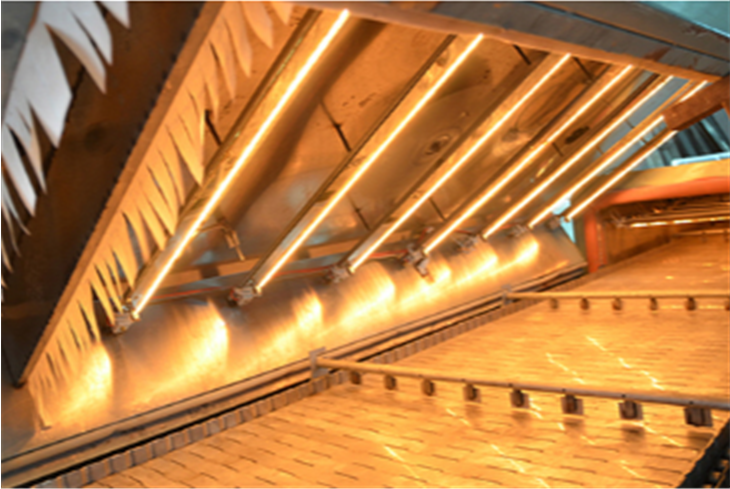
If you’ve ever worked with rotary ovens, you know the frustration of thermal inertia. You turn the heat on, and then you wait. And wait. Those standard heating elements take forever to get up to speed, which usually means you’re dealing with uneven crusts and a power bill that makes you cringe. We found a better way: gold-coated shortwave infrared (SWIR) lamps. These things are fast. Like, 300°C in a matter of seconds fast. The secret is in the gold. Think of a regular quartz halogen tube like a lightbulb that throws heat everywhere—including directions where you don’t need it. By adding a thin layer of gold to the back of the tube, we basically build a mirror. All that infrared energy gets bounced forward, straight onto the food. You get a much more intense hit of heat without having to crank up the wattage. It’s just smarter physics. Getting them into your setup These are high-wattage halogen tubes made with quartz glass, so they can handle the brutal heat inside the filament without breaking a sweat. Depending on how your oven is built, you can grab them with R7s or SK15 connectors. Usually, they just slide right into most industrial rotary setups without any fuss. The real magic, though, is the response time. Heavy cast-iron elements act like a sponge—they soak up heat and hold onto it. These lamps don’t do that. They just transmit the energy. If you use PWM (Pulse Width Modulation) controllers, you can tweak the temperature almost instantly. No more overshooting your target and praying the food doesn’t burn. A couple of things to watch out for Now, this kind of power comes with a catch. Because the heat is so concentrated, it’s easy to sear the outside of your product before the middle is even warm. If your conveyor belt is moving too slowly, you’re going to have a problem. You’ll need to spend a little time dialing in your timing to match the lamp’s output. Also, these tubes get incredibly hot. Make sure your wiring and sockets are rated for the thermal load. You don’t want to find out the hard way that your housings are melting.